IoT Temperature Sensor & Web Server
Microprocessor Systems (E155) · Fall 2024
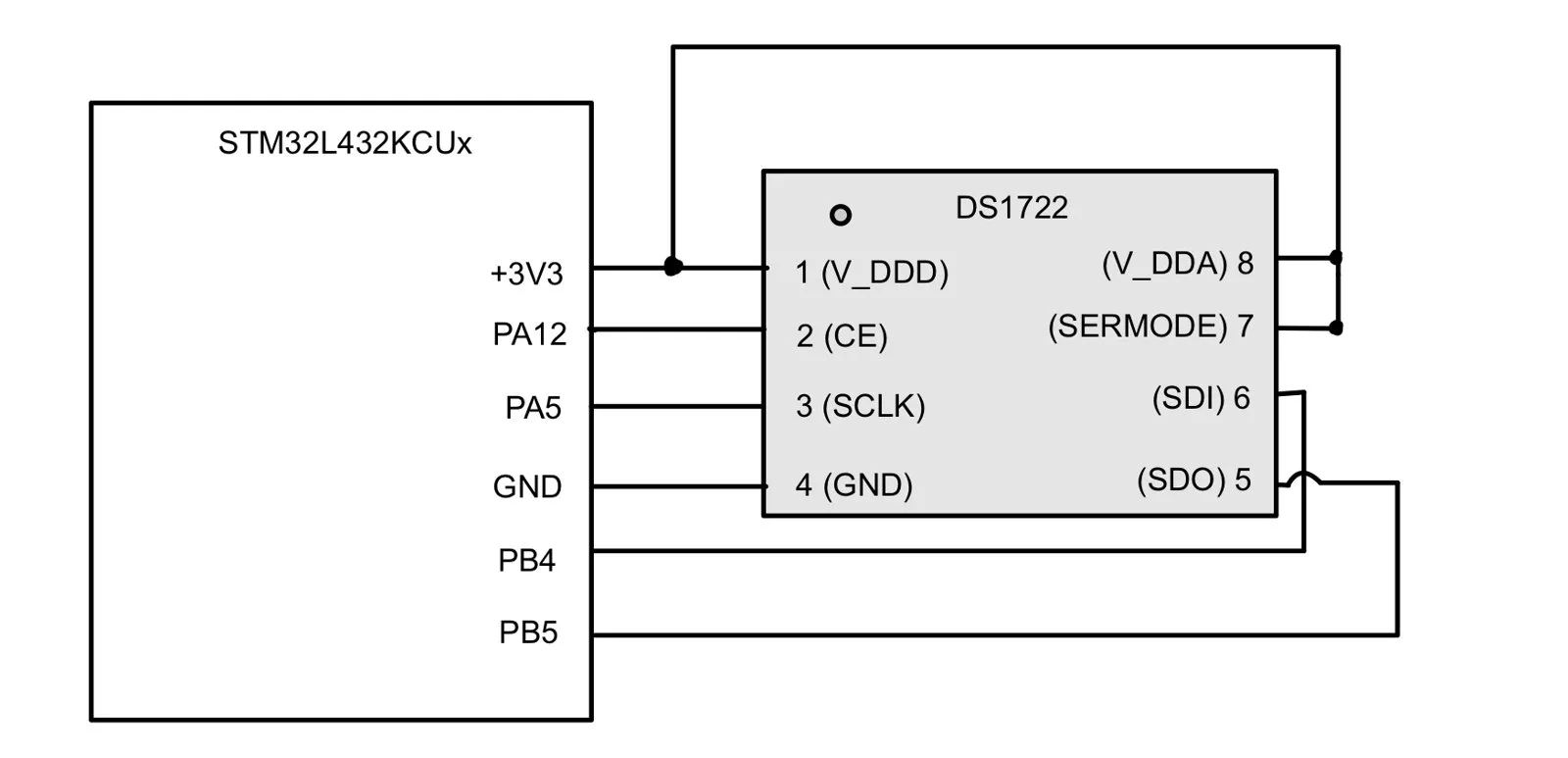
An STM32 reads a DS1722 temperature sensor over a register-level SPI driver I wrote and serves live readings, adjustable resolution and LED control on a web page through an ESP8266.
Overview
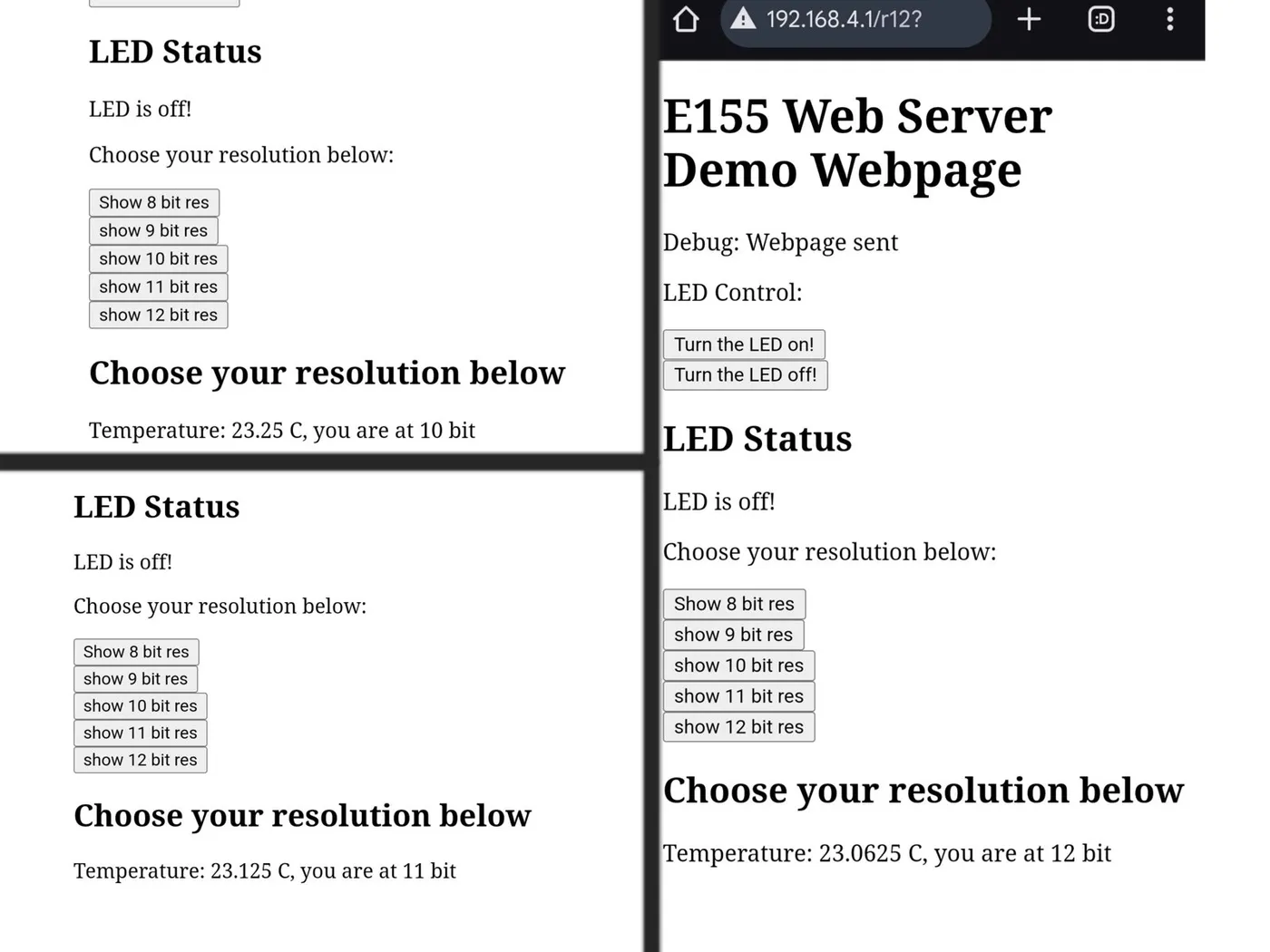
The goal was an internet-connected temperature sensor. An STM32L432KC microcontroller talks to a DS1722 digital temperature sensor over SPI and to an ESP8266 Wi-Fi module over UART. Anyone on the network can open a web page to see the current temperature, change the sensor’s resolution from 8 to 12 bits, and switch an LED on the board on or off.
Firmware design
I used CMSIS for hardware abstraction and wrote the SPI driver myself at the register level. The code is split into three layers:
- SPI and USART drivers. SPI is configurable for baud rate, clock polarity and clock phase so it can work with other peripherals, and runs full-duplex with 8-bit frames. The transfer routine waits on the TXE flag before sending and the RXNE flag before reading, and accesses
SPI1->DRthrough avolatilepointer so the compiler can’t reorder or drop register accesses. - DS1722 driver. It reads the two temperature bytes, combines them into a 16-bit signed fixed-point value (
hi << 8 | lo), and divides by 256 to get degrees Celsius. - Web server. It parses HTTP GET requests from the ESP8266 to set the LED and resolution, and builds the response page.
Testing
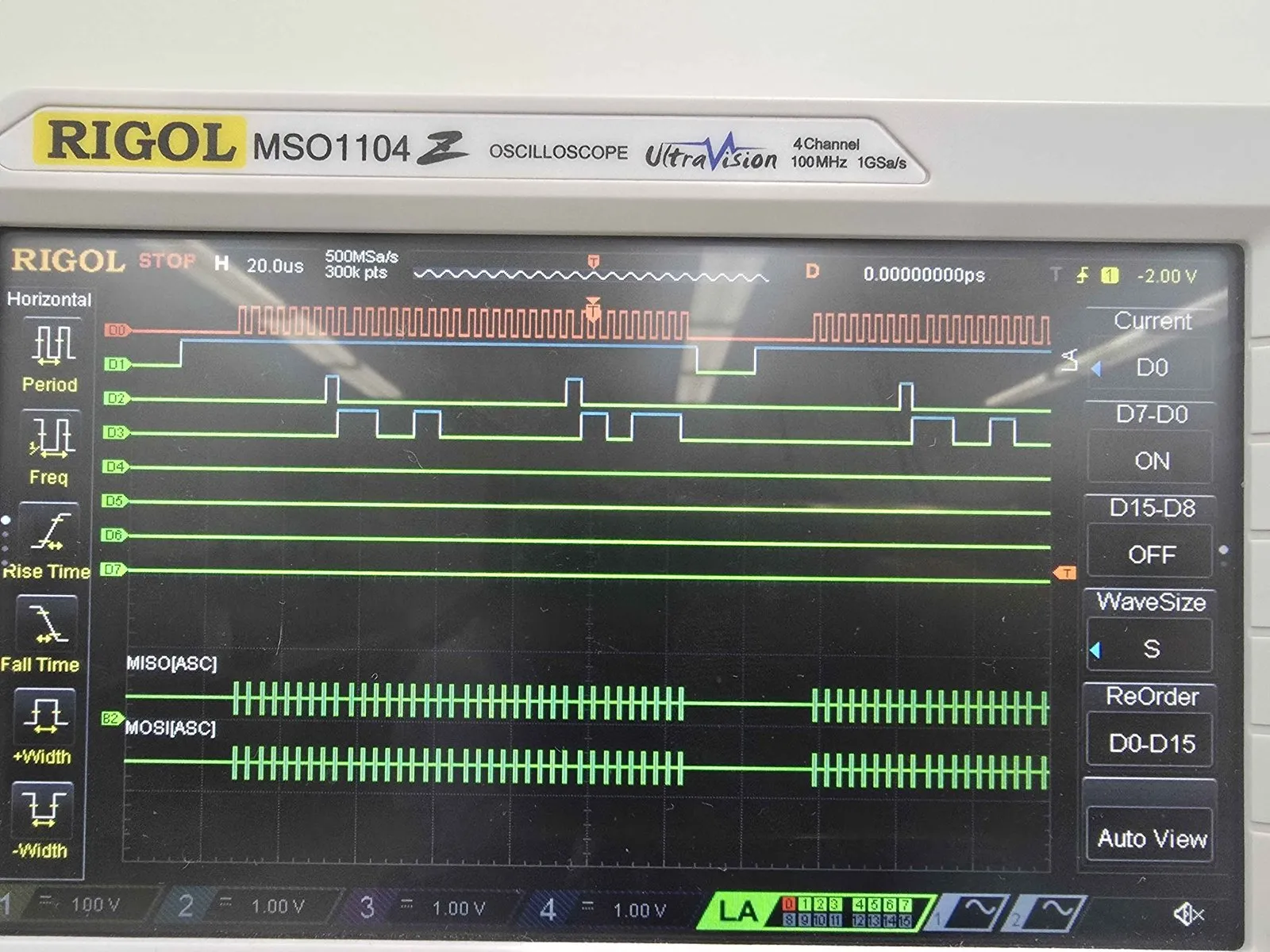
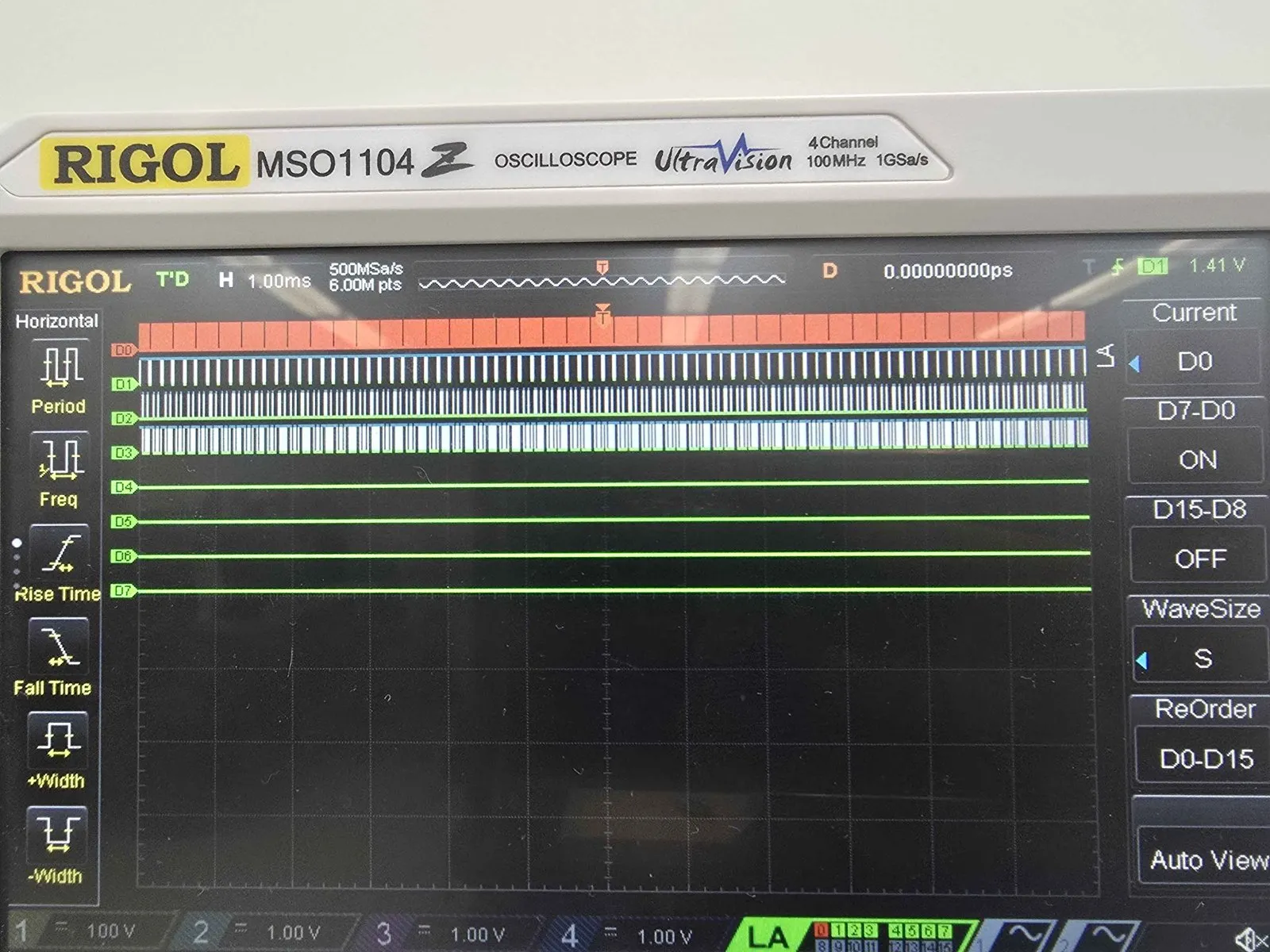
I checked the sensor’s range by warming it with a finger and cooling it with canned air to get readings below zero. Then I confirmed the SPI transactions on a logic analyzer: clock, chip select, CIPO and COPI from top to bottom.
Lessons
Most of my debugging time went into SPI configuration, and into a broken breadboard wire that caused intermittent connections. That second problem is why I now check physical connections with a meter before assuming a bug is in the code.